Sunday, March 20, 2011

Living in the 80's

Below the ground I listened to an up and coming Independent music artist, right smack in the sea of the Indie music scene here in Santiago. My roommate, Rosario, filmed her music video, which debuted in the upstairs section. When finding the place, I walked along a Bohemian street hosting pubs and small restaurants and turned the corner to a dark alley where I saw some dim light floating out of a rectangle in the wall. Youth with dark rimmed glasses and black clothing stood outside smoking cigarettes and waiting in a tiny line. In my light purple checked knee length H&M tartan quarter sleeved shirt, dark jeans, and light hair with smaller dark rimmed glasses, I poked my head through the line, grateful to see my roommate sitting on a couch next to the entrance. I waved like a little American, eager to enter the underground.

Inside resembled the Madonna Vogue music video (thought without men in suits); I felt like everything around me was black, white and edgy. Smoking inside somehow seasoned the mood with independence and free spiritedness, combined with people standing casually with their cardigans, glasses and long dark hair with bangs. Some wore old newsboys hats and girls wore simple high heels and their bangs almost covering their eyes. The bar was cheap, and people held beer bottles that would be deposited in a wire shopping cart once finished, sitting next to the door. The walls were covered with Spanish words, posters, random memorabilia, sketches, little drawings of aliens or a map of the long skinny country. Like the inside of a high school locker, memories of the past and ripped out magazine pages covered the nondescript walls.

The place hadn’t existed a year ago, but now hosts members of the Indie music scene which is growing quickly. A girl from the States spotted me and served me beautiful English conversation. She is here pursuing a PhD in musicology, specifically checking out the Indie music scene. I commented that it felt like the 80s, with the electric keyboard and the style that people seemed to have. The singer had worn a modest pink dress with half her face covered by her hair and dark make up. She played an electronic keyboard with three female back-up singers swaying back and forth, doing different moves with their hands, dressed in black and white. A woman in a phosphorescent aqua dress joined them for one of the songs, performing a miniature rap in the middle. Green light magnified the seeming kitschy feel, reminding me of the red light bulb that I used to burn in my room occasionally accompanied by a pink and orange lava lamp.

“Some would say Chile never left the 80s,” said my United Statesian friend, “People are nostalgic about that time, when there was a strong sense of community pulling together during the Pinochet dictatorship.”

Before heading to the party, I had watched a documentary about photographers during the reign of Pinochet, who were killed for the exposure that their documentation brought. Their camera had more power than a gun, revealing the atrocities of the military dictator. Prior to Pinochet, Chile had a democratically elected Socialist leader, which was toppled by a military coup. Although the States may not fully admit it, there is evidence that the coup was backed by the CIA, in order to stop the Socialist regime. However, the leader that followed, proved to be worse. Pinochet killed thousands of dissidents, burying them alive in the mines at times. The documentary promoted the importance of not forgetting the lives that had been destroyed through conserving the photographs and publicizing them.

Watching footage of military vehicles spraying people with tear gas throughout the streets that I am currently getting to know, it seemed incredible that it was only in the 80s that this occurred. Observing Santiaguans through this lens, I now calculate out what age they would’ve been when the country was torn apart in this way. I now notice the strength of the people, having dealt with catastrophic earthquakes and a tyrannical regime, recovering from the pain with hospitality and vigor.

After this first social event, we moved on to a film party located in a similarly “underground” location behind a plain rectangular door carved into the concrete. Upon entering, my eyes feasted on another Vogue scene, only this time the members were older. The space inside felt like a barn – open with exposed rafters and functional walls and floor. A disco ball reflected sparkly light around the whole room, adding to mystique of the environment. I wanted to just stand and watch the people, as I am often like a deer in headlights when presented with so much newness in my environment. Again, the indoor cigarette sparks reminded me I was no longer in America.

“We are a bit early,” she told me at midnight, “Parties usually start around 1 or 2 in the morning. I don’t know why, but this is the culture.”

We stayed until only 2 AM and then made our way back to the apartment to the tune of the Yeah Yeah Yeahs in her friend Cecilia’s car. Part of me felt very at home, surrounded by people with similar interests to me, and the other part felt very tired from all the cultural digestion. Rosario helped me work on my Chilean slang back at the apartment which was completely helpful and necessary.

Running through the strip of parks that cut through the city this morning, to my newly discovered Chilean music, I passed statues and streets named after people and important events of their history. It’s common in South America to live on a street with a date (for example, 11 de Septiembre, which I believe was when Socialism ended). Passing police at the streetlights, I thought about how they were now mere traffic guards and seemed rather harmless. I thought about how lucky I have been, to live in a place where a tyrannical or military government has never been my reality. I have never been scared of my home surroundings, never thought the police would turn into the enemies. Reading about the intervention currently happening in Libya, I now think about the fear existing among the people of that region, not to mention so many other places in the world. How fast a government can change sometimes, when power is allowed to become a physical force.

Perhaps this is why the community feels so strong here and people have invited me to their birthday parties and family occasions. That sense of fear that they once felt, caused them to realize what was really important. Though it sounds cliché, what was once rebellion is now hospitality and empathy. Once you know pain well, you can’t help but understand people more deeply. I believe I have felt that deeper emotional knowledge all the way down the Andes. It comes out in their invitations, friendship and also their music.

Y por eso, me encanta.


Wednesday, March 16, 2011

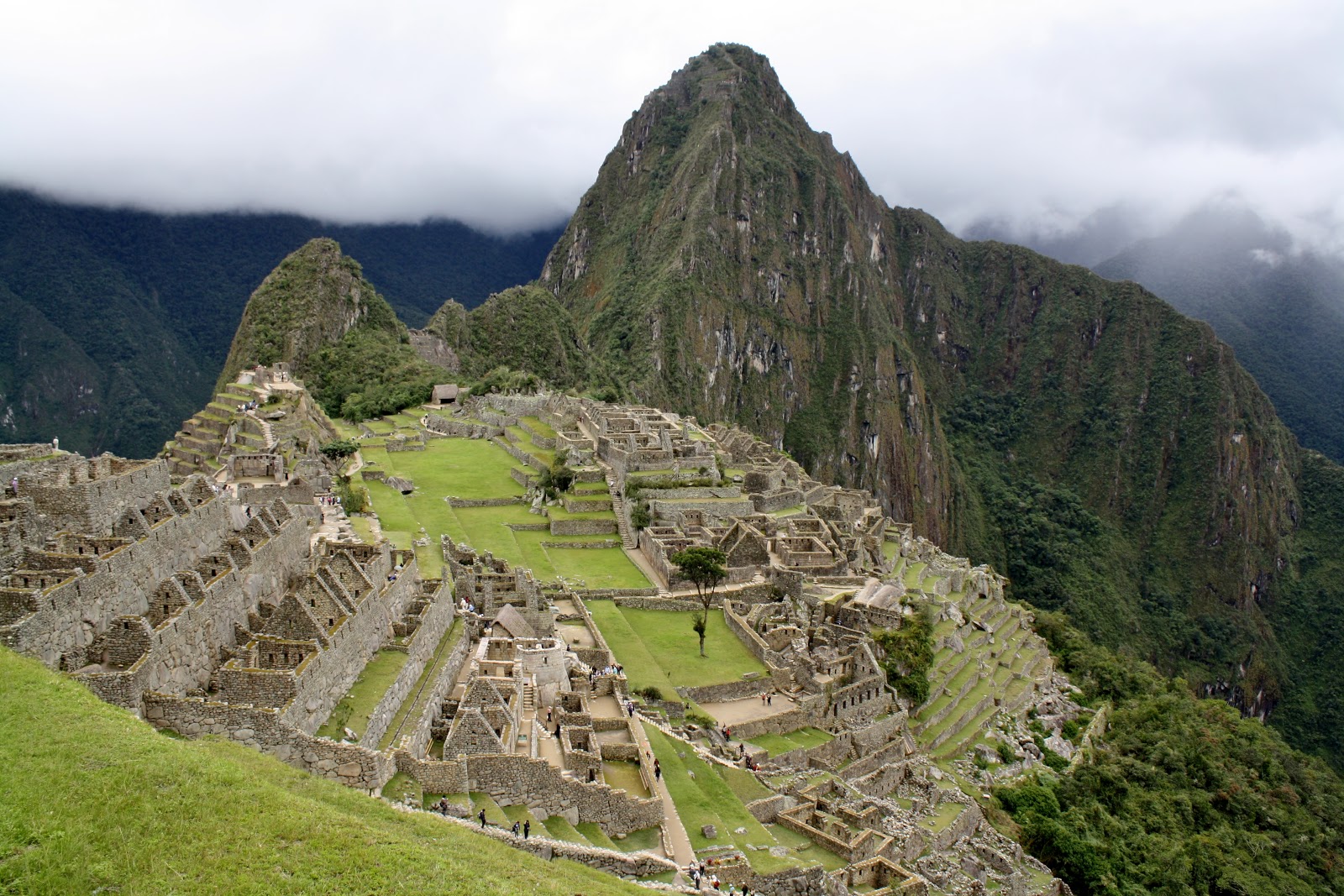
Pachu Mama, Mother Earth: Machu Picchu

“I would first like to take the time to congratulate you, because today I think many of you have made a dream come true,” said my tour guide as we stood at the entrance to the city.

Settled on Machu Picchu mountain, surrounded by the jagged Andes, sits a little vacation village created for the Incan king during the 15th century. A four day trail from Cusco will guide your feet there, bringing you through the Sun Gate at the far edge of Machu Picchu mountain where you can cock your head to see that the sillouhette of the village resembles an Incan man’s face. To obtain an aerial view, wake up at 4:30 AM and hike up Wayna Picchu (Young Peak) at 7:00 AM. Be one of the first to see a blanket of clouds covering the sleeping settlement. In an hour the clouds will be yawned away.

“I’ve been traveling for 8 months. I’m a contracter in London and left my job to figure out how I can start my own contracting business one day… but I fear I’ll go back still not knowing how to do that! [laughter] I need to gather the courage. I’m going back a different person than I left.” said the Jamaican Londoner that shared Arrow Rock with me at the top of Wayna Picchu.

A guy from Brooklyn and I were the first of four to arrive at the top, joining a couple from Britain sharing breakfast on a rock. Huffing and puffing in the thick clouds I exclaimed,

“So, where is it?!”

“I don’t know! Maybe over there?”

“Or maybe there?”

We stared at a drawing carved in a plastic informational post to get our bearings, our Northeast cynicism mocking our unfortunate situation. Taking silly pictures with piles of clouds behind us seemed a good activity for the time being. He then recounted,

“The funny thing is, I came to Machu Picchu last year but it was closed. People were stranded here because of flooding. I really should stop coming during the rainy season.”

“So what are you doing in South America?”

“I’m actually a Producer and headed to Ecuador. I’m filming for a nonprofit that provides lifeguards during Carnival. Everyone goes swimming and apparently many people drown.”

While thinking of the obscure causes that non-profits support, we were joined by a Japanese contingent and then some rowdy young Londoners. One Londoner was swearing at his friend for missing the view of Machu Picchu once the clouds started to burn off.

As if I were scratching away the winning numbers on a lottery ticket, green mountainsides were lit up by the sun to my left, who was slowing pulling back the cloud curtains. One by one patches were burned away, the beams cutting into the atmosphere. The humble entrance blew away the cloudy introduction. The curious fog had whet our appetite and we were not disappointed. As I slowly looked around me, I felt the excitement of being there. All around me was this natural revelation that had been there all along. I was standing in the middle of a new world, sparking inspiration.

If only Sigur Ros happened to be playing on the rocks below (in their Icelandic sweaters).

Heading down was trickier than going up had been; the stone steps were steep and narrow. At one point I crawled my way through a crevice between two rocks and thought about how they could crush me (very comforting). As I passed people on the way down, who asked me how much longer, I encouraged them in their journey.

One wonderful thing about being solo is that you wait for no one. You are off and running up the mountain whenever and heading down as carefully as you desire. After I signed my name out of the book at the entrance, I meandered through the ancient civilization for as long as I liked, spending time sitting on the walls, staring at the mountains and avoiding Lama spit.

On my two hour English-speaking tour (I felt bad for the Japanese guy) I learned a bit about Machu Picchu. It took the Incas about 60 years to build the place and it was still unfinished. They used the terraces for agriculture and created aqueducts that brought water down through the town. They were scholars of the sky, chiseling a rock that resembled the Southern Cross and another one that represented Mother Earth and her three levels: the underworld (snake), earth (puma) and the heavens (condor). Shadows showed them what day or time of year it was. Sacrifices were made to appease the gods, which they thought were the mountains. Even I swear those mountains are gods; their majesty is breathtaking. If a storm came through or perhaps a bad earthquake, they might even sacrifice a child of nobility to appease them once and for all.

I wonder if that worked.

When their king stopped coming from Cusco, they thought something must be wrong so they fled the city. The Spanish didn’t actually invade Machu Picchu until nine years later though, taking all the gold they could find in exchange for chicken pox. More Incans died of chicken pox than fighting the Spanish.

The city wasn’t rediscovered until 1911 when an archeologist came upon it while searching for the Incans last stronghold, led their by a local boy. Since it wasn’t the last stronghold, he didn’t pay as much attention and continued on his way. It wasn’t until a bit later that he returned - realizing it’s value. Since then, they’ve excavated it and Yale University has graciously taken all of the artifacts. Peru is currently in dialogue with the university for their rightful return to the Cusco Museum.

During the busy season up to 4,000 people check out the city and hike up the mountain. In the rainy season, about 1,500 – 2,000 people enter. The Japanese thought Machu Picchu was actually sinking, but that has since been proven wrong. Though, they are going to start limiting the amount of people that visit.

Getting to Machu Picchu is quite the journey as well, involving flying to Cusco, being bussed through the Sacred Valley, taking a train to Aguas Calientes, and then taking another bus actually up to the site. When I first started planning, it all seemed quite confusing. But once you’re there, you have PLENTY of willing Peruvian tourist agencies more than willing to help you.

“Ok, Lady,” said the tourist guy that I signed up with at the airport as he escorted me to my hotel in Cusco.

His ring tone was a Justin Beiber song, which made me feel immediately comfortable with him. He set me up with a bus tour through the Sacred Valley, to all different archeological sites, and all my expenses for Machu Picchu (train, bus, and entrance ticket). I know he loved me. I know he cared. I shouted "wheneva" and he was there.

While sitting on one of the walls of Machu Picchu, I stared at the mountains in front of me. Time passed me by as my thoughts spaced out into the distance. The mountains still stood there though, even as time pushed through. Majestically, they had watched the Incas and now they were watching me.

I can’t seem to get a handle on the scope of that, my mind being too small. But in that moment I knew the beauty of it, and that is all I could understand.


Friday, March 11, 2011

Being Gringa

“You look like a tourist.” Patricia lamented, leaning against the entrance to the kitchen.

Unfortunately, settling into a new country is challenging when you have to tear down American stereotypes that have attached themselves to your appearance. When judged by my appearance, I believe I’m something along the lines of wealthy, opportunist, flaky, naïve and into partying. I don’t know how many people realize that America is in a recession, most people are drowning in college debt and the standard of living is too high for the wages that one receives. The most expensive thing I have EVER owned has been my computer and I was only able to travel because I have a useful skill, saved up some money, and put my college loans on hold.

When you meet people from western countries, they seem to be one of two extremes: they’ve worked hard and saved up money to be here or they’re living off their parents’ wealth and are just floating around. Of course there are the students, humanitarians and capitalists in there somewhere as well. But I’ve had a few experiences of meeting Westerners where I was very turned off by their attitude towards me as if they were trying to group me into one of the extremes. They seemed suspicious of me and used that as an excuse to be condescending.

“Oh, you studied in Chile? I’m headed there next. I’m intimidated by the Spanish… I hear it’s a lot faster.” I said to a girl from the States who had been living in Lima for about 5 years. She stared at me blankly as if she had no conception of the widespread view of Chilean Spanish. Even among South Americans it is notorious for being botched up and having a whole realm of idioms and words that exist nowhere else. It would be like a person not acknowledging that Irish is sometimes difficult for even English speakers to understand or that American English is different from British English. She then replied, “Well ANYWHERE you go you have to just learn the idioms and local dialect. I studied in Chile for about a month before I went to Argentina, and I’d say they’re just different. ”

The other strange thing about being western is that most times, in fact, you do come from a higher standard of living and find yourself easily in circles of the upper middle class, or even the wealthy class, because these are the people who either know English or want to know English. Therefore, if I’m teaching English, I’ll probably meet wealthy people. It’s strange to feel the class difference and sometimes I have these kind of Great Gatsby moments of being around people who have a maid, drive an expensive car, own a blackberry, and the art on their walls makes me feel like I’m in a gallery or a museum.

“You graduated about 4 or 5 years ago. What have you been doing since then?” said my interviewer for a business school, sitting behind a desk with my resume right in front of him. I looked at him curiously and casually pointed to the place entitled “work experience”. “I’ve been teaching English for 2 ½ years at the New England School of English.” I replied.

“Oh, right right, sure.”

He and his partner soon told me how they only hire people who already have a work visa. They explained how many institutes start the paperwork for your work visa, but everything is basically done under the table, and that they can basically fire you whenever they want because nothing is actually legal. Getting a work visa is actually more involved and when you stop working you have to leave the country.

Did they think they were doing me a favor or was this some sort of hazing?

I’ve gotten the impression that the competition between English institutes and schools is very high. English is in high demand and teachers basically have their pick of all kinds of opportunities. I emailed someone about an apartment and he emailed back, “The apartment is taken, but I’ve been wanting to learn English! Can you teach me three times a week? How much do you charge?”

Also, the people who I’ve interviewed with have been quite nosey. “You’ve interviewed somewhere else? What’s the name? How much did they say they’d pay you?” Or, when my employer found out I was from the New England School of English (recently rated one of the top English schools on the East Coast, if not the USA) he questioned, “What kind of teachers do they hire? What’s their curriculum? How do they get good teachers?”

Throughout my whole experience in South America, about 90% of people have gone above and beyond my expectations of being kind, hospitable and overall just friendly and fantastic. On the way to Machu Picchu I met a woman from Santiago who gave me her email and invited me to her birthday party when I got here! It was wonderful. However, there is of course, that 10% that either rub me the wrong way or have outright offended me. The other day I had a little stumble when I was about to rent an apartment.

I was excited about the place and had told the woman the day before that I would take it. It was clean, quiet, and the rooms were very peaceful and comfortable. There were gardens outside and even hammocks! She was very organized and told me that there was no drinking or smoking allowed in the house. Although wine is one of the reasons I came to Chile, I liked the look of the place so much that I figured it would probably save me some money. It would definitely be a challenge, but I figured I could go to a friend’s house or go out for drinks.

The next day I went back ready to pay for the month. A woman who does the administration had come to talk to me about all of the rules of the contract. This time, I got to hear them in English and discovered that in fact, I’m not allowed to have ANY friends in my room. She kept saying how the house was a place of rest and it was important that it be a home for the people who live there. I’m all in favor of no partying, but to not be able to have even just one friend come over? And even more, not be able to share a bottle wine? Suddenly I felt the retaliation of my gut saying, “NO WAY.”

Unfortunately, I didn’t act fast enough. I contemplated these rule as I was signing the documents, this was my own mistake. Perhaps it’s because I’m a flaky American. It wasn’t until I looked into my wallet to hand over the payment that I realized that I couldn’t. Community is too big a part of my life; I can’t live in a place that suppresses that. Was this a convent?

Well, when I explained that I didn’t want it after all, I set off a whole storm of Spanish between both the owner and the administrative lady. The administrative lady had already spoken down to me in English, explaining the rules as if I were a child. But once she realized her time was for nothing, suddenly she felt the need to tell me,

“This isn’t like America! This house is a safe place. That is IMPORTANT. You need to understand this. This isn’t America! This is a good place and you will not find this kind of security. This is not America!”

She kept reiterating that this wasn’t America, even stating,

“I know! I lived there for 5 years.”

To which I now, beginning to boil under my skin, shot back,

“I KNOW this is not AMERICA. I’ve lived there my ENTIRE LIFE.”

I wish I could have spouted off to her in Spanish, but it just wasn’t possible. I felt like she saw me as careless, flaky and looking for a place to party (party of 2?). I was beginning to think that the place was actually a cult or a convent, especially when they demanded that I erase all the pictures I had taken of it from my camera. She also demanded a copy of my passport, for some kind of security reasons and was saying,

“You can’t just come in and take pictures. This is someone’s home. This is a safe place.”

By the time I left the gate, I wasn’t sure what I was leaving. I really thought the landlord was about to give the people Kool Aid in there. Needless to say, I was trying to find a liquor store the whole way home. I’m definitely glad I didn’t sign that contract.

Being an English speaking Gringa goes both ways. Sometimes I find myself with the wealthy upper class, embraced with open arms, and other times I’m looked as suspiciously and assumed to be very careless. At this point, I am only in my initial stages of getting to know Santiago, so I just have to take these experiences in stride. Supposedly “Gringa” (feminine) refers to the fact that I’m foreign or have an accent. According to Wikipedia, the term came about during the Mexican war when the Irish would sing some old song that was like, “Green Grow the Rushes, Oh!” which the Mexicans began interpreting as “Greigo” which later became “Gringo”. It also says that Americans, specifically, can be referred to as this because Latin Americans don’t want to call us “Americans” and the other option would be “United Statesians” which is awkward in English (and we don’t use it anyway).

Green Grow the Rushes, Oh!

Friday, February 25, 2011

So, how fast can one learn Spanish?

As I move down this continent and up in age groups I feel more pressure to learn Spanish as fast as possible. I’m beginning to find myself in more lofty conversations where the speed is faster and I trip on about 50% of the words that they’re saying (quite the jump from Special needs kids and toddlers). If I could read a transcript of the conversation I would probably understand more of it, but to just listen to the quick sounds, my brain has trouble keeping up with the foreign tongue.

Lima is fantastic. The air is warm, the ocean breeze is salty and the land is flat. Metropolitan activity excites the streets and the architecture reflects the developing economy. Southern California constantly pops into my head as I’m in a taxi driving along the wide stretches of highway and able to see for miles down the long stretches of avenues. The modern city lights tell me that it’s a few notches above Quito in development and I feel a few notches safer as well. My backpack is often worn on my back now.

Last night I spent some time on a rooftop with a mixture of Peruvians, ex-patriots (or, ex-pats: people who no longer live in their home country, all of which were English speakers) and lots of Pisco (a liquor made from grapes). English and Spanish competed for conversation the entire time. Since I was the worst player on the Spanish team, I wasn’t sure what to do. Self conscious of actually speaking my broken Spanish I just wanted to keep listening to the rapid conversation surrounding me, hoping that I would comprehend 75% of it eventually. I felt babied when a person would start speaking English with me, like when you can’t keep up with the person you’re running with so they run slower just for you. Kind in some ways, but no one likes to be pitied. Asking people to repeat their thoughts felt very dorky. In English it might sound like….

“Yeah, so I thought the movie was pretty cool but nothing to write home about.”

“Um… excuse me?”

“I thought the movie was cool but nothing special.”

“What? Sorry… more slowly, please?”

“Cool. The movie was cool. But not great.”

“Oh! Ok. Sure. Cool?”

“Good.”

“Oh! Ok. Nice.”

*Silence*

If you notice in that dialogue, it begins with two kinds of slang: “pretty cool” and “nothing to write home about”. If a fledgling English speaker didn’t know that “pretty” could be used for “very” or that “cool” could actually mean “good”… or, even worse, if the speaker couldn't pick up on the pronunciation of either, then the whole meaning has no chance of coming about. The listener wouldn’t even make it to the next idiom and would possibly only understand the word “home” and wonder, “Did you watch the movie in your home?” For the person speaking, who only made a casual comment about some half decent movie, all the repetition would feel kind of annoying leading to them avoiding the fledgling English speaker. This would reduce their interaction to smiles and facial gestures which only take you so far.

Hence, I smiled a lot last night and drank a few pisco sours with maracuya (passion fruit). Very tasty.

Prior to even arriving, I spent about 5 minutes misunderstanding my cab driver who was trying to tell me that I owed him a dollar because he had given me too much back in change. I remember my students telling me that cab drivers in NYC had been impossible to understand and now I fully comprehend why. It was the quick mumbling that really got me; I hadn’t had the same problem in Ecuador. The Peruvian accent is a bit faster and less clear. Unfortunately, I think Chile is going to be even worse.

Therefore, I am bolstering my Spanish skills as fast as I can. I was reading aloud to the maid here (yes, there is a MAID where I’m staying. Completely unheard of in the US, but not so out of the ordinary for a middle class family here) like a little kid to their mother.

La sala de espera de este doctor es muy grande porque trabaja solo.

The waiting room of this doctor is very big because he works alone.

Practice makes perfect… or makes more practice where language is concerned. Learning a language is never-ending which makes it forever fascinating but often frustrating. However, the feelings of stupidity and frustration haunt me, forcing me to absorb as much as possible as quickly as possible. I know that even at that it will still be slow-going, but I’m determined to press on!

When I got in the car after the rooftop I immediately spoke to the driver in Spanish and demanded that he play Spanish pop music only. Down the wide highway and passed the city lights we drove as I tried to kill all my English thoughts.

Hola, Espanol.

Wednesday, February 23, 2011

Song for Sharon

My friend Sharon just got engaged the other day. She and her boyfriend had been apart for five months before he flew down with a ring in his pocket and proposed to her that evening. By the time I saw her the next morning she was glowing nonstop and bumping into things all day.

Joni Mitchell sings a beautiful song in the form of a letter to her friend Sharon about how she’s moved out to NYC but all she really wants is to find that one person she can share life with. Not only did I feel it necessary to use the title for my friend Sharon, but I love the way that Joni poetically tells the story of love (and the search for it).

I went to Staten Island, Sharon.
To buy myself a mandolin
And I saw the long white dress of love
On a storefront mannequin
Big boat chuggin' back with a belly full of cars...
All for something lacy
Some girl's going to see that dress
And crave that day like crazy.

I think that “some girl” is Joni. I used lyrics from a Joni Mitchell song in my last post from a song about Woodstock. Ironically, Joni never made it there due to a rainstorm. She ended up stranded in New York but created this beautiful song about the event.

I’m going on down to Yasgurs farm
I’m going to join in a rock n roll band
I’m going to camp out on the land
I’m going to try and get my soul free
We are stardust
We are golden
And we’ve got to get ourselves
Back to the garden

Joni was a bit a hippie and from CANADA. Guess where my Sharon is from?

CANADA.

We have now come to the real connection between my Sharon and Joni.

It took awhile for both Jen and I to fully adjust to a Canadian, attempting to understand the language and local idioms. To make matters worse, Sharon also grew up on a farm in Alberta. She was speaking about silage, birthing cows, cutting amneonic sacks, and was stressed out when their bulls weren’t going to make it across the border because border control couldn’t read the numbers that had been tattooed in their ears.

Nothing is worse than an unexpected group of 80 bulls.

She was saying “Ay” and talking about their currency up there as loonies and tunies (Looney Tunes?). We talked about playing board games when we were little while she gloated about having thousands of acres to create her hundreds of fort kingdoms. She told us about the time she took some kind of gun and shot a coyote. Due to the length of the gun, she had to open up her window along with the back window of the truck she was driving. We were told that when the cows are calving she has to check on them at 1 AM or 2 AM to make sure all is going well, while her dad checks them in the early hours of the morning. Sometimes they have to drop everything and run outside when a calf is born and hasn’t broken the amneonic sack that is now drowning it. She also expressed,

“I think every kid should see an animal butchered. I mean, I had to eat my favorite cow when I was 12.”

Sharon uses the word sh** and calls the handle above the passenger seat the “oh sh**” handle, saying that us Americans don’t swear. To her credit, she’s actually talking to the right crowd where that’s concerned.

That being said, Sharon is my dear friend. We watched many an episode of Gilmore Girls together and I ate all of the meals she cooked for Jen and I, especially her banana chocolate chip muffins. I also took full advantage of any offered massage. She showed me pictures of her Albertan childhood that resembled something out of a Land’s End catalog with her family often in the outdoors grouped together in snow gear and various outdoor attire. Now she has a shimmering special something on her ring finger, which means she’s got a whole lot of something wonderful coming her way.

Best wishes, my Canadian amiga.

Monday, February 21, 2011

We Are Stardust (We Are Golden)

What would you do if you were diagnosed with a fatal disease? This thought is the reality that the directors are facing here. Clark has been diagnosed with Lou Gehrig’s disease which will wear down his motor neurons for the next few years. He had been experiencing difficulty walking while he and his wife were visiting churches in the States. In Boston, his friends told him to get checked out which resulted in various MRIs and being referred to two different doctors both of which confirmed his fatal diagnosis. Since returning to Quito, he has been struggling with the high altitude a bit, but not to any extent that an outsider would notice. He does carry a cane now though, without stress or difficulty. Today many people came forward in church to lay their hands on Clark and his wife Melinda to support them in this diagnosis, showing their love and respect for the work they have done and the people that they are. Though Clark and Melinda shirked any kind of pity, it was hard to keep a dry eye.

Clark was educated to be an attorney and in fact had a successful practice out in Mammoth, CA. He had come down to Quito on a missions trip some years prior, with his future wife Melinda, and a few years later felt moved to return and begin an orphanage here – moved by God, they would attest. Despite their friends’ concerns, they packed up their life and came down here 20 or so years ago and began creating a place where unwanted children could come in the hopes of being adopted. At first it seemed uncertain as they faced great difficulties, even involving losing the life of a baby in the process. But though they questioned this calling, they didn’t turn back.

They told people that they felt called by God to start this orphanage but would be challenged with, “But has God also called your children?” Ecuador is not exactly the safest country, nor is it on par with the United States in standard of living. They assured their children that if the territory were to affect their family, they could always go back to the states. This consolation provided enough assurance for the children to be on board with the decision. They could always go back if they absolutely needed to: family came first.

Now I’m sitting here, 20 years later, enjoying the fruits of their labor. There are three buildings here, all of which provide a loving environment for any child to grow up in. I sit on the porch of a guest house that welcomes any team willing to help. As of now, there is a team from Boston here, which makes me even more contented (they were showing us pictures of all the snow up there, making me feel a bit nostalgic). They’ve helped guide the process of hundreds of children to families. It’s amazing the things that you can do in your life and the lives that you can greatly influence. Helping a child find a caring family seems to be one of the most basic to human happiness.

And now, here they are faced with a life threatening illness. The difficulty of that only challenges their character even more to respond in a great way. Some people would fall apart when faced with such finiteness, yet many would only be able to respond with great strength and power. I have often thought that losing a spouse would be more difficult than losing a child, and here is a woman faced with exactly that. Time doesn’t stop for trials, it keeps moving along challenging us to cope. However, its incredible the support that you can find in the people around you. As Melinda put in, she feels like she has been injected with peace and comfort only by the grace of God, feeling the warmth of a thousand prayers.

Realizing how short life really is, reminds me that appreciating relationships and building a meaningful existence is paramount. Not allowing stress or difficulties overcome you is key, as you intentionally take advantage of all the goodness that surrounds you: friends, family and helping others. It sounds cliche, but most true things are. We often repeat these kinds of things for a reason. Life is really about giving and loving the best you can.

Saturday, February 19, 2011

Dias para las Tias

For the past three days we’ve been offering spa service to the Tías. From 12:30 until 4:00 the Tías can come to our guest house for facials, manicures, or pedicures. We’ve been playing peaceful spa music, or Enya, along with decorating the table with crackers, cheese, grapes and boiling water for hot chocolate and herbal tea.

Over the past few weeks I have gotten to know all of these women through the English classes that I’ve been teaching along with helping them in each of the three houses with the children. Most of the time there are three Tías in each of the three houses: the baby house, the toddler/preschool house, and the special needs house. The special needs house is right below our guest house and we often hear them playing music at around 8:00 in the evening, imagining all of them having a dance party down there.

At 8:30/9:00 at night I have gone over in the dark to the preschool house just in time to hear the children going to bed or a Tía reading or praying with them as they drift off to sleep. A couple times I have gone over and little Joshua or Josue has been sitting on the landing, being punished for not wanting to go to sleep. I only know he’s up there by the little feet that are sticking out of the railing. Meanwhile, I sit with the three Tías below the stairs and teach them the alphabet song.

That moment of rest at the end of a busy day is when I get to see their personalities exhaled, which is really enjoyable. We’ve played matching games with vocabulary words such as crib, blanket, bottle. The first game that I created I drew amazing pictures of the items and they had to find the matching Spanish word. Each day I would teach three different groups of Tias, so it was fun to see some of them excel and others laugh and fumble at their lack of English knowledge.

In the baby house there are two Tias that are around my age: Nancy and Alisha. Alisha brought us out to her house in the countryside one day and says that I know more Spanish than I speak, which makes me laugh. Whenever I walk in I hear, “Senorita Saaaaaarah. Beunos Dias!”. There was one afternoon when I was looking for some social company, so I visited them while the babies were sleeping and showed them pictures of Scotland, Europe and friends back home. They both came into our spa a bit camera shy, despairing with a smile at any picture I would take of them.

There are some other Tias that I click with more than others. There’s Merry from the toddler house, who one of the other Tias jokingly referred to as Merry Christmas during one of our games. She’s very funny, in a dry kind of way, and seems to get a kick out of the children, wanting to mess with their minds a little bit sometimes (in a playful kind of way, which is right up my alley). Isabel strikes me as a strong woman yet retains this sense of loveliness and openness. There’s also Marcia, who has a harder looking face and is stooped when she walks or stands because something has happened to her leg. But when she feeds the babies or works with Thalia (who has special needs) she sings to them in the most motherly way, gently holding them and rocking them.

All of the Tias come with their own way of disciplining and mothering the children, carefully watched and monitored by the directors here. Most rooms have cameras , making them very intentional about how they instruct or play with the children. We’ve been told not to pick the toddlers up as much because once we’re gone they start to cry. Everyday all of the toys are disinfected and every piece of laundry is washed. I’ve had to sit and wash the balls in the ball pit: it was not the most fulfilling task, especially since I wanted to shoot the children’s music that played on repeat in the background.

Giving back to the Tias and offering them a day of treats was so wonderful for us. Sometimes I felt like I had found my true calling, since I strangely enjoy picking at things – therefore, picking at people’s toes and nails all day was actually quite fun for me. Jen would pull off their fask masks when they were finished, Sharon would carefully paint their fingernails. We were like the Asian nail places, only we were speaking English amongst our Spanish speaking Tias – quite humorous.

The kids here have such a wonderful home as a consolation to their lack of real family. When the children are adopted, it must not be easy for these women to let them go, but they know they have to. They’ll have a place in the child’s photo album of their years here, but continue on raising children and babies until others are ready to do so.

Muchas gracias, Tias.