Everything is packed in boxes again, for the 10th time since 2010. I've moved twice a year, in and out from one place to the next. Some places were for necessity, others for change in scenery. My apartment after college, where I stayed for 2 1/2 years, has been my longest place of residence for the past 12 years. I'm looking forward to the day when I break that record.
A diverse variety of bird callings woke me up this morning. Yesterday, when I pulled into the long dirt driveway of my childhood home, my cat bounced over to greet me. The woods around me shimmered green and yellow with shadows of long, tall trees. The crunchy sound of an animal stepping through the forest startled me. I stopped for a moment to look and listen carefully. Wondering if there could be a bear strolling through the leaves and bushes, I picked up my squirming cat and brought her inside. When I listened for the footsteps again, the sound seemed to have disappeared. As I was bringing stuff into the house, I glanced over at the front yard to see a deer walking around. I pulled opened the sliding glass doors in the house to let in the warm breeze and finally sat down to have a glass of water.
This is the house I lived in for 15 years of my life, 17 years on the same piece of New Jersey property. I've been a part of building it - walking over the beams and helping paint the walls as a three year old. Sitting at my kitchen table, I read an article about Sufjan Stevens in Uncut magazine. It had been sitting on my shelf in my room since March, but I hadn't had time to even think about it. I love this quote:
"You have to cast out your demons and rebel against your traditions, but you always have to crawl back to the homeland."
Crawling is how I would describe my return journey here, after a intensely busy and fast-paced semester. The homeland tastes sweeter after journeying around on the other side - the moving, the boxes, the up and down stairs, and feeling displaced. I feel relieved of the world when I'm here.
What a gift the present can be.
Now it's onward through 6 hours of Pennsylvania. 68 degrees and partly cloudy. No snow. Concrete highways. Hope to see some lovely, rolling, green hills.
On the dining room table of my brother's apartment lay, Is Everyone Hanging Out Without Me? (And Other Concerns) by Mindy Kaling, writer on The Office and star of The Mindy Project. While my brother was taking a shower, or getting ready, or something - or maybe his girlfriend had grabbed the book off her shelf for me because of our conversation - I can't remember - somehow it ended up in my hands. I began reading it, and found myself laughing out loud - which I'm not sure has ever happened to me from reading a book. My brother's girlfriend then (rather thoughtfully) gave it to me as a Christmas present and I've recently pulled it off my shelf as a form of self-care, to get away from the piles of work that have been slowly eating me alive this semester... bite by bite.
Here are a few excerpts:
(from chapter Types of Women in Romantic Comedies Who Are Not Real)
I love romantic comedies. I feel almost sheepish writing that, because the genre has been so degraded in the past 20 years or so that admitting you like these movies is essentially an admission of mild stupidity. But that has not stopped me from watching them... I simply regard romantic comedies as a sub-genre of sci-fi, in which the world created therein has different rules than my regular human world... So it makes sense that in this world there are many specimens of women who I do not think exist in real life, like Vulcans or UFO people or whatever. They are:
THE KLUTZ
When a beautiful actress is in a movie, executives wrack their brain to find some kind of flaw in her that still allows her to be palatable... A not 100-percent-perfect-looking-in-every-way female? You might as well film a dead squid decaying on a beach somewhere for two hours... Our Klutz clangs into Stop signs while riding a bike, and knocks over giant displays of expensive fine china. Despite being five foot nine and weighing 110 pounds, she is basically like a drunk buffalo who has never been a part of human society. But Fred Tom loves her anyway.
THE ETHEREAL WEIRDO
...If she were from real life, people would think she was a homeless woman and would cross the street to avoid her, but she is essential to the male fantasy that even if a guy is boring, he deserves a woman who will find him fascinating and pull him out of himself by forcing him to go skinny-dipping in a stranger's pool.
THE WOMAN WHO IS OBSESSED WITH HER CAREER AND IS NO FUN AT ALL
...I am slightly offended by the way busy working women my age are presented in film. I'm not like, always barking orders into my hands-free phone device and telling people constantly, "I have no time for this!" I didn't completely forget how to be nice or feminine because I have a career. Also, since when does having a job necessitate women having their hair pulled back in a severe, tight bun? Often this uptight woman has to "re-learn" how to seduce a man because her estrogen leaked out of her from leading so many board meetings... Having a challenging job in movies means the compassionate, warm, or sexy side of your brain has fallen out.
***
Those are just a few, and they make me laugh out loud. I think she gets at these weird images and ideas that we can get lodged in our mind due to the leading females that we see who get the guy: must be mysterious, it's cute to be klutzy, better not get to work-obsessed or I'll turn into a nasty person.
This commercial actually makes me tear up:
It's when I see the younger girls running as fast as they can. I'm thinking about how they haven't simply accepted the phrase, or had it take a certain drive out of them. The look on their faces when they're running as fast as they can just gets me. They don't have these weird images in their heads yet - the strange ways women can be portrayed and the expectations that can influence them. These little girls believe in themselves.
I remembered recently how over the summer, in the all girls group, the girls refer to each other as "Girl". "Girl, let me help you." "Girl, your hair." Girl. Their intonation had this power to it. It's hard to even imitate it unless I'm around them.
Girl. Run. Laugh. Think. Be.
And see Romantic Comedies as Sci-Fi movies.
Duke and Barron - The Kelpies of Falkirk, Scotland
In a country whose national animal is a Unicorn, it seems fitting to have two mythological creatures sculpted in steel to welcome river travelers. Duke holds his head down as if drinking water while Barron stretches his neck to the sky to bask in the sunlight. According to mythology, a water spirit would shape-shift into a Kelpie (water horse) who would lure weary travelers walking along a river or loch. Delighted to take a ride, humans would leap onto the sticky back of the Kelpie, who would whisk them down into the depths of the water with a crack of thunder.
CRACK BOOM.
Sufjan Stevens played I am the Christmas Unicorn with enough confetti and smoke to set off the fire alarms. We all had to file out without an encore. In an interview with him, he mentions this fire-alarm-provoking imagination,
"My imagination can be a problem," he says. "I'm prone to making my life, my family, and the world around me complicit in my cosmic fable, and often it's not hard to manipulate the hard facts into a vision quest But it's all an attempt to extract meaning, and ultimately that's what I'm in pursuit of, like: What's the significance of these experiences?"
His most recent album, Carrie and Lowell, was created underneath the backdrop of the death of his mother in 2012. I recently was able to visit the grave of my grandmother who passed away in November. If I were a musician, I would love to title my own album after my grandparents, Alec and Sarah, and create songs reflective of their lives and my own stories of them. This time I left, I stood in the road waving from the car through the night, watching with blurry eyes the venetian blinds in the front window. Thicker stripes of yellow light streamed through where my grandfather's fingers were pulling them apart to peek through.
I hope that our own spirits shift into different shapes when we die as resemblances in our families; our children; ourselves. When we are most weary, may we find them to refresh us in the water of this cosmic fable. That's what I like to imagine, which fortifies my heart and soul.
Oh be near me, tired old mare
With the wind in your hair
Amethyst and flowers on the table
Is it real or a fable
Well I suppose
A friend is a friend
And we all know
How this will end
"She was standing at the periphery of her own life, sharing a fridge and a toilet, a shallow intimacy, with people she did not know at all. People who lived in exclamation points. "Great!" they said often. "That's great!" People who did not scrub in the shower; their shampoos and conditioners and gels were cluttered in the bathroom, but there was not a single sponge, and this, the absence of a sponge, made them seem unreachably alien to her (p.156).... There was something unquestioning about her roommates' lives, an assumption of certainty that fascinated her, so that they often said, 'Let's go get some," about whatever it was they needed - more beer, pizza, buffalo wings, liquor - as though this getting was not an act of money (p.157)... The world was wrapped in gauze; she could see the shapes of things but not clearly enough, never enough (p.160)." - Chimamanda Ngozi Adichie, Americanah
Going out into nature feels like venturing into the "real world" and unwrapping the gauze of the everyday luxuries. This gauze can hold me hostage from experiencing how life really operates, causing me to feel an empty kind of captivity by that white noise of routine and sense of expectation of the present and future. With the students out in the desert, it seems that substance abuse is a response to feeling like they couldn't meet parents' expectations, coping with a divorce, a death, and wanting to escape their own memories and thoughts. Going into the desert is like going into the deep end, sharing emotions, digging up realizations, and working out who you are within the backdrop of the natural, unpredictable forces surrounding you. It is sobering to me; it is my therapy.
***
In the desert, there is so much sage surrounding us all the time. We walk over it, step on it, smell it, use it's branches to make wooden spindles and fire boards to bust a fire. To bust a fire, you need a bow (a juniper branch with cordage tied from top to bottom) which you lodge a spindle (thin, long, piece of sage wood) into by twisting it in the cordage. Then you carve a small hole in the fire board (a larger, round trunk of sage wood) in which you lodge the spindle and slowly move your bow bow back and forth, back and forth, backandforth, backnforth - faster, faster, faster - until, your spindle starts driving out smoke from the fireboard - more and more smoke! Faster and faster, until, you create and ember. You then place this ember into a little nest of dried sage bark and pieces. You move your hand, holding the smoldering nesting (with a fire glove on), in a figure eight motion, allowing the wind to potentially ignite that nesting, eventually blowing into it, until you finally see a flame. There you have it: you have made fire, without a match or a lighter, but with force, and with the help of some sage and juniper.
It's hard. It doesn't happen right away for most people and I don't even like the process very much! When a student gets a fire, they begin to tally them. If they get 15 fires, they can earn a flashlight. During introductions, students often include the number of fires they've made and miles they've walked. I've busted just one, with the coaching of two students. But this serves as a key metaphor out there for hard work and success - turning embers into flames.
"Ah, a Juniper berry.... Let the gin-making begin!" said one of the boys, imitating some kind of British-type accent, making me laugh, as he looked at one tiny periwinkle Juniper berry on a branch in front of him. He's been out there for 6 or 7 weeks, sitting with his thoughts, entertaining the group with his stories - choosing to identify himself as a drug addict, to his own surprise. Despite regular use and selling, he had never thought to identify himself as an addict, but more as just a high school kid and then college freshman. He took Honors Philosophy in high school and read the 1500 pages of Atlas Shrugged, similar to another one of the group members. Yet drugs had been taking over his brain and he has only now realized that he can digest more words of a book than he has been able to in years.
We walked through the sage to a dried-up lake bed to play Ultimate Frisbee and then Capture the Flag. The earth out there is so cracked, stepped on by herds of cows - and baby cows! - drinking from the small puddle of a lake in the middle, into which dried up cow patties and rocks are thrown. Afterwards, we sit under a Juniper tree where one of the boys begins to lead a group surrounding one of his therapy assignments to write a letter of accountability for everything he's done. Some of the others checked in, sharing their feelings, thanking us staff for the games, saying, "I forgot I could have fun while sober." Then the student begins to read aloud his letter, where he states everything that he's done that has brought him to this place - DUIs, lying, drinking, etc. Everyone listens and everyone gives feedback, noting areas where he could say more and areas where we all can relate. As we speak, we play with the earth, the cow shit, and the plants that surround us. We thank him for sharing and the group is closed; we head back to camp.
On the way back, I converse with another student - about his family, how he was bullied from a young age, how he owns three cars and crashed one in a suicide attempt, how he began drinking when he lost his sports scholarship. We get into camp and the dinner cycle begins. We begin by washing our hands and feet - I sit on a log using my pocketknife to clean up the backs of my heals which have layer upon layer of dried skin. I walk back to the fire, sit back in my crazy creek (outdoor chair) and watch and listen around me of busting of fire, boiling of water, cutting of vegetables - joking, reading, frustration, laughing - carving of spoons, writing, drawing... whatever it is that they are working on around me. I feel like life is fresh again - reduced to its most basic parts: relationships, surviving, and growing.
We are then left with the fire, as the night sky moves into a navy blue tone. We acknowledge the people and things that we love (family, yoga pants, the ocean), share resentments (the cold, addiction), people who need our amends, say what we did well today and what we could do better tomorrow - we share how we're feeling. Then we put our packs back on, walk out to the tarps in the sage and tied to Juniper trees that are serving as shelters. My co-leader picks up the guitar and starts singing Johnny Cash, Radiohead, Phantom of the Opera, and ends with a Cowboy tune that incorporates Coyote sounds. Four of the boys join us in the center of the sage stage, in the middle of the desert, and begin to do "ballet" - throwing their arms up in the arm, resembling a quartet of syncronized swimmers out of the water, finding themselves on the land - no longer drowning - high on life. I laugh and smile and laugh and smile, but don't sing - just take in the growing night sky and the shadows of the mountains and the sounds of play.
"Goodnight! And remember... Oregon....
(and this is where there is disagreement)
HATES (some yell)
LOVES (some yell)
YOU!"
I seal myself up in my sleeping bag, take one final look up at the big dipper, and bury my head inside. Goodnight, goodnight and goodnight to this crazy unpredictable world.
"All teachers must face the fact that they are potential points of reference. The greatest challenge a teacher has is to accept is the courage to be; if we are, we make mistakes; we say too much where we should have said nothing; we do not speak where a word might have made all the difference. If we are, we will make terrible errors. But we still have the courage to struggle on, trusting our own points of reference to show us the way."
"I have more hope that someone who has shouted, 'Stop the world, I want to get off!' can get back on and enjoy the ride than someone who wants more cushions."
A few summers ago, my roommate Nikki and I decided that all of the world was a mystery. Already unconsciously aware of this fact, we brought forth this mantra to frame each and every experience we encountered. We would add it to the end of statements, such as, "Nikki, the newspaper came today... what a mystery!! How did it even arrive here? Who brought it and what is he trying to tell us??!" One morning we decided to leave him (or her!) a muffin with a note, but I don't think that they took it; THE MYSTERY CONTINUED....
The funny thing is though, sticking this lens on the front of everyday experience, like a newborn encountering the world for the first time, truly enhanced it for me; it not only made us laugh, but reminded us to wonder... about everything! The world was made new; we were reminded of the magic of it. We created the space to ask questions that may not have answers and delight in the unknown rather than fear it.
I've been wondering about the connection of meaning making and adventure therapy, after reading an article that claimed that adventure therapy gets at the spiritual aspect of ourselves. Willie Unsoeld, a famous adventurer who was trying to figure out the components of Outward Bound, talks about the "cosmic perspective" his essay entitled Spiritual Values in Wilderness and the numinous:
He [Rudolph Otto, author of "The Idea of the Holy"] coined a new word - the idea of the "numinous". It's a dimension of human experience. The numinous dimension of reality consists of mysterium, tremendum, et fascinosan. Mysterium is the sense of mystery. There has never been a sacred anything that lacked mystery. The mysteriousness of it is the sense of something more, of a hiddenness beyond which you can't go... When you step into the wilderness, and here is where I make the transition, there is a mystery in nature which I thin is one of its great attractions for us. There's a hiddennes of organic growth, of how a seed decides to be an oak tree. No matter how much reference we have to the genetic coding of RNA, DNA, somehow it doesn't come out totally explained.
Not only does nature embody mysterium, but each of us is made from it. Though we can learn about our own biology, isn't it baffling how everything works and how the outside world can be so influential to our inner selves? Even more, when chaotic mysterium suddenly comes a little closer to ourselves, we may want meaning from these experiences and help our spirits to cope with chaos by dwelling within the comforts of music, the arts, personal connection or even endorphins of physical activity. These delights create energy in us; we become delighted in their hidden sparks of the numinous. In Circle of Quiet, Madeleine L'Engle writes about her response to chaos:
After a day in the emergency room of a city hospital, a day in which I was surrounded by accidents, dying children, irritable patients, many of whom spoke no English and could not follow directions, incredible patience on the part of the understaffed doctors and nurses, I felt somewhat the same sense of irrationality in the world around me (all these people were there by accident) as did the man who was almost killed by the falling beam. Whenever this occurs I turn to the piano, to my typewriter, to a book. We turn to stories and pictures and music because they show us who and what and why we are, and what our relationship is to life and death, what is essential, and what, despite the arbitrariness of falling beams, will not burn. - Madeleine L'Engle, Circle of Quiet
In this way, our tiny bodies and spirits exist within and beyond this expansive wilderness that extends way way out there. Yet, if we keep our heads connected to our bodies and keeping breathing into our spirits to explore and connect with the tremendum (raw power) of the environment and connections that surrounds us, we can engage with the mysterium (awe-some-ness). We can feel loved, inspired, delighted and even excited or simply at peace. Adventure experiences can set the stage for meaning making: space is created for thinking, connecting, and exploring. In the article Adventure Therapy in Occupational Therapy: Can We Call it Spiritual Occupation? the author connects humans with meaning:
Human beings are meaning makers, in that they make and express meaning through their performance as well as through their cognitive activities. Moreover, making meaning through performance is constitutive of who we are. As human beings we attribute meaning to our own and others activities, and it is through our actions that we express what we mean and who we are. Making meaning in everyday activities is considered the essence of spirituality.
The world is so mysterious, in great and terrible ways. We can make it meaningful of meaningless in any way that we'd like to and in this way, help our spirits grow or allow them to become disabled. May we meet the numinous and walk amongst its mysterium, tremendum, et fascinosan.... you know what I mean?
Low sounding thunder echoed through the streets twice. It sounded like the sounds you hear under a bridge, when the heavy traffic is speeding above you, as the wheels move over metal planks.
Baboom…. Baboom….
A woman on the news compared it to transformers. I looked up at the sky and around the tall buildings in search of the source.
We ignored our questions, and walked towards Back Bay station, a couple blocks away.
“Excuse me!” said a policeman who pushed his way, running through the crowd.
Dad was tired and sometimes tears came down from his eyes along the way, since his time had been so disappointing. Hoping to break 3 hours, he had come in a little after 4. After having trained for months and been looking forward to the marathon for awhile, this was unfortunate.
I took a picture of all the people heading up towards the subway from Dartmouth street. I didn’t know that on the other side, people were running for their lives, or to help people, or to find a way out of the city. As I crossed the street, I overheard a man on his cell phone, “Yeah – what the hell happened?” I kept walking but also kept glancing back at him, half of me wanting to know what had happened, but also not really wanting to know.
I looked around at the people walking into the subway station. But before we entered, we approached the security guard in front.
“Two bombs exploded downtown. They've called in the military. I wouldn't get on that subway. Just saying, I’m being nice.”
I looked at my tired father and worried that we wouldn't be able to get out easily, but didn't want to make him walk. We all looked at each other, trying to decide what to do in those few seconds.
“Ah, he doesn't know what he’s talking about,” said my brother.
So we decided to get the first train we could out of there.
We entered the Back Bay subway station. I looked around for signs of chaos, trying to listen in on people’s phone conversations. I was walking quickly to buy a subway pass, while my brother walked quickly to the bathroom and my mother helped my father catch up with us. There were some transit police roaming around the gates, but I didn't want to know anymore information about what happened.
“Shit.” I said, in front of my family, while waiting anxiously for the next subway train to push through the tunnel. My brother had just read a text from a friend, but only said outloud, “Man, if what Kevin is saying is true…. something about wheeling people away without limbs?”
“I don’t want to know. Don’t tell me.”
We had no idea what it had been, that sound we heard twice. I just wanted to get home. Suddenly the city felt dangerous – packed with so many people I don’t know, so many people who could do something crazy. Suddenly I was in the US, conscious of potential enemies who would look to hurt a booming east coast city. The buildings seemed so big now, the tunnel that I was in seemed like the perfect place for an explosion, and everything was moving so slowly.
A train pulled up. We walked on and sat next to people who were just sitting on the subway, as usual. Then the guy next to me said, “Excuse me, but did something happen?” I can’t remember what I said to him, but probably something along the lines of that we were at the marathon, and now we were heading home, and that’s all I wanted to know.
The doors of the train remained opened for longer than usual, so it seemed, and a voice came over the speaker saying, “This train will not be stopping at Downtown Crossing. This train will not be stopping at Downtown Crossing.” It began to move away, out of the underground to where I could see a view of the Copley Square buildings. The sky was blue and everything seemed normal before we popped back underground again.
I was glad that we sped through some of the stops, but were we heading away or into where something had happened? At the next stop, a couple of women and their daughters got on the train, carrying shopping bags. They were on their phones. “What is going on?” They asked us. The train was quieter now, as people were trying to overhear people’s answer to that question, or on their phones themselves. A stop or two later, a woman had an image on her phone and was staring at it. She was sitting next to my mother, who looked over her shoulder to see.
My mother gasped and raised her hand to her mouth, “It’s the Finish Line!”
I could hear a crack in her voice, signaling tears in my eyes immediately. She went on to say, “Look at the people! Oh my gosh….” Shock was pushing them out of my system, my body couldn't hold all this water. Immediately I thought about the announcers, the spectators, the tired runners, the people selling t-shirts, the security guards, medical people, and everyone who I had just seen standing around that area. Were they……. what were they? Were they okay??
I leaned on my father, the stumbling marathon runner, and didn't know what else to do. I was thankful that we weren't in an emergency room, or worse, on my brother’s birthday. We left the train, we walked home. We made it home. We were home. That was all I had been wanting since we heard those sounds and it had happened. I had never been so thankful to cross the threshold of that Somerville apartment, together.
"But
originally, “amateur,” from the Latin verb amare, “to love,” referred to a
person who loved what he was doing.
Similarly, a “dilettante,” from the Latin delectare, “to find delight
in,” was someone who enjoyed a given activity. The earliest meanings of these
words therefore drew attention to experiences rather than accomplishments; they
described the subjective rewards individuals gained from doing things, instead
of focusing on how well they were achieving.
Nothing illustrates as clearly our changing attitudes toward the value
of experience as the fate of these two words.
There was a time when it was admirable to be an amateur poet or a
dilettante scientist, because it meant that the quality of life could be
improved by engaging in such activities.
But increasingly the emphasis has been to value behavior over subjective
states; what is admired is success, achievement, the quality of performance
rather than the quality of experience.
Consequently it has become embarrassing to be called a dilettante, even
though to be a dilettante is to achieve was counts most – the enjoyment one’s
actions provide."
Mihaly Csikszentmihalyi Flow: The Psychology of Optimal Experience
(Rockport, MA. Memory card was left at home, but this is an exact replica)
"And then, some morning, the mind wakes, comes to life again. Not in a city sense - no - but beach-wise. It begins to drift, to play, to turn over in gentle careless rolls like those lazy waves on the beach. One never knows what chance treasures these easy unconscious rollers may toss up, on the smooth white sand of the conscious mind; what perfectly rounded stone, what rare shell from the ocean floor. Perhaps a channelled whelk, a moon shell or even an argonaut.
But it must not be sought for or - heaven forbid! - dug for. No, no dredging of the sea bottom here. That would defeat one's purpose. The sea does not reward those who are too anxious, too greedy, or too impatient. To dig for treasures shows not only impatience and greed, but lack of faith. Patience, patience, patience, is what the sea teaches. Patience and faith. One should lie empty, open, choiceless as a beach - waiting for a gift from the sea."
The living room is yellow, with dark carved wood hugging each window pane, fireplace mantel and floor board, matched by a table, chairs and cupboard built into the corner of the dining room. Blue tile lies in the entrance, resting below a grassy green door with a circular frame and rectangular window in the middle, providing a peek-hole into this castle. I am lounging in a friendly black leather chair, feet seated on a matching foot rest, accompanied by a silent fireplace. Orange and yellow leaves give all their colors through the windows lining this front wall, their shadows colliding with sunbeams on the caramel wood. A petite chocolate chair with an ocean cushioned seat states me down from the opposite corner. At its right hand sits a lamp on the chestnut radiator - curvy licorice stem with a creamy shade. Sculpted metal leaves pop out of each end of the curving window frame. High heels echo, asking for the white dress. Fall air is wrapping me up in this space that my friend is learning to call her home.
Yesterday, I was reminded that my Grandfather turned 91 this week. My life isn’t even 30% of that. He has lived three times longer than myself and has spent 60 years married to the same person.
Meanwhile, I just ordered an espresso with dos leches (normal milk and condensed milk) along with a brownie and some tiramisu ice cream in a coffee shop on Calle Italia, near my apartment. Oh the extravagance of little pleasures, how I love that. I will miss the colorful money that I used to pay for it, along with the Spanish I used to order it and the conversations that I can’t quite understand around me. In my mind, I am dedicating this elaborate sugar feast to my Scottish Grandfather, probably situated in front of his TV across the Atlantic. Here’s to 91 years of life, Salud!
The scope of spending 60 years with someone is wild to me. 60 years of laughter, joys, disappointments, sadness, support and just living – probably feeling like they want to leave one another during the darkest days and feeling the opposite on the others. Sometimes I wonder what they talk about before they fall asleep at night, after all that time. They had children, who have now had children and time keeps moving us all along. Somehow thinking about the length of life calms my anxieties, realizing that it doesn’t end after failures - there is much to be learned from. Although, all the sugar I just took in might just kill me.
Last night some songs from the 80s (or early 90s) came on my friend’s radio, which I translated into Spanish (not perfectly). I swear the 80s is often more present here, in the clothes and the music. Black and stone-washed jeans are popular and sometimes I see people wearing sweaters and sweatshirts with colorful graphics or waxed on pictures that remind me of things I bought as a child. It seems whenever we have the radio on in the apartment there are all these classics coming on from U2 and Phil Colins, etc. Often, there are remakes of the songs as well. Rosario was telling me that she heard the US is usually about three years behind in fashion though, so maybe this is just the time for me to catch up. Anyway, the other night I found myself trying to translate some Tom Petty, something that used to play constantly in the back of my friend’s Dodge mini-van during my childhood.
“Pues, ‘Last Dance with Mary Jane’ es de Tom Petty.”
“Tom Peddy.”
“Tom Petty. Y, el dice ‘el ultima baile con Mary Jane. Una vez mas para morir… el duele? Doler? Y, morir el duele. Sabes ‘Mary Jane’?”
“Claro, marijuana.”
“Si, po… la Mary Jane hace el duele mas facil y mejor.”
Hearing songs from my culture in other countries makes me proud. When Katy Perry’s Firework came on in Ecuador while we were out dancing, I couldn’t have been happier, pounding my fists in the air and jumping like a Gringa.
Not only is English available, but other languages in general. My roommate and I were laughing the other night about our bootleg movies. We seem to have one in every language. The other night we watched the Japanese “Ponyo” with Spanish subtitles.
“Do you understand?”
“Of course….. it’s a kid’s movie. I could probably understand without the subtitles.”
We popped in “Balada Triste” (by Alex de la Iglesia) but it was all in Russian and we couldn’t read where the subtitles were located on the menu, so that was out. Awhile ago, we watch “Je t’aime Paris” in French with Spanish subtitles while commenting in English. When I first moved in, we tried speaking Spanish more, but I began to give up trying to explain more complicated thought processes. Between the intonation, pronunciation and all the words unique to Chilean Spanish, it would take a long time to fully understand or use it well.
Si, po. (“po” is kind of used like “like”)
No, po.
Ka chai? (Did you catch that? Used in the same way as, “you know?”)
Claro (sure)
Lata (lazy)
Filo (whatever)
Vacan (cool)
Piola (cool)
Liz Taylor (listo – ready)
Y, Boston? (And, you?)
“Y Boston?” is the most entertaining for me. “y Boston?” is in reference to, “Y, Vos?” which is like, “And you?” usually used to challenge someone. Why they seem to randomly put English references into phrases, I'm not sure. But, for example:
“You drank too much last night.”
“Y, Boston?” ("So did YOU.")
I love how they play with Spanish, but as an English speaker, it’s challenging to be apart of it. They say Liz Taylor in references to “Listo” which means “Ready”. Apparently, when Pinochet died, on the front page in large print was:
LIZ TAYLOR
Meaning, he was finished. The Clinic is a leftist publication that pokes fun at politics, while offering some intelligent commentary at the same time. When Paul McCartney came to visit, there was a picture of him with, “Can’t buy my love or my tickets!”. The Clinic also has a three-floor pub, with large posters of politicians and jokes printed over them. Their menu can be taken home with racy descriptions of the food, often naming the meat and chicken dishes with double meanings.
One of my students is what they call a farandula, meaning that he likes keeping up with famous people. While sitting at an unassuming restaurant nestled within houses of Providencia, he often points out different starlights to me.
“The man sitting next to you is the manager of a football team.”
“The woman behind you, in the red, is a on the series ‘Macho’.”
“That man behind me to the right, on his computer, is a famous journalist.”
I first learned about Osama’s capture through this student as well, having neglected to read the news that day or the night before.
“I have a question for you. What do you think about the killing of Osama?”
“What?”
“Osama.”
“Ah, they killed him?”
The major political news here has to do with the Hydro-electric power plant they are building in the South, in the neighborhood of Patagonia. I think it’s kind of a shame…. feeling like they should leave the landscape alone. The other night, Rosario and I got a nice breeze of tear gas, drifting off of the protesters entering the subway, having been sprayed out by the government. Used lemons were lying on the metro floor, used to calm the stinging effects. We were joking that there will be a lemon shortage and Rosario was reading later, that tear gas actually affects your fertility.
And with fertility, let’s go back to the first topic: 91 years. 91 years of life. 60 years of marriage. 10 years of the rocky 20-somethings. Years of childhood, children and parenting. Years of growing old and learning how to cope with life and enjoy it.
Throughout my life, my energy has come from trees and sky, stars and open ocean expanses iced with wind gusts and sailboats bobbing on top of the water. Half of my life has been comprised of weekends chopping firewood for our wood burning stove, summer evenings inhaling the scent of cut grass off the freshly trimmed lawn or riding my bike through walls of humidity while listening to the crickets and summer peeps, skidding to a stop on the dirt lane. The crab apple tree in the center of my yard contains a stump in the middle where I would sit and write in my journal lofted above the yard while Friskey would lie out on a branch nearby. Even within these moments, I knew I was actually painted on a page of a storybook.
When I needed to think, finding myself in an empty kitchen after school, I would head to the woods and journey through the dead leaves and moss covered ground, trekking down to the swamp below my house or through the backwoods down my lane. In the winter time, parts of the swamp would freeze over, solidifying curvy narrow ice paths where my brother and I could slide. Runs to White Lake or down Slabtown Creek Road beneath shadowy tree trunks bursting with color characterized all seasons, the winter appearing in grayscale. With my first decent camera, I would take pictures of the sunset or photograph the tree tops for hours, the hard copy pictures now slowly bending in crates in my basement.
The silence slows steps and escorts you carefully into the quiet of the woods. They are very much alive, yet largely still. The trees continue to grow soundlessly; micro-organisms in the ground crunch with their mouths closed and only the occasional squirrel or bird making a swift move up the trees or over to neighboring branches can be heard. Alone on a hilltop or farmland edge I would sit and wait for some kind of miracle or inspiration to come, to write something genius in my journal while following the moving clouds with my eyes.
Fresh air rarely filters through this new metropolitan realm. Silence is elusive, found only within my apartment and sometimes creeping along darkened sidewalks or tiny side streets. I try to walk with it, but it runs away to lock itself away for me when I get home. People inhabit every corner surrounding me, carrying conversations, walking hand in hand, moving in vehicles or peddling bicycles. Grassy park commons and fountains painting rainbows in the air outline the city with nature, which I relish. Food and clothing come packaged in tasty styles and decorative wrappings, trimmed with articulate architecture and ancient materials. The city is a fabric of pockets which have been stitched together to form neighborhoods and districts, galleries of the wealthy and poor, laid out among towering structures that climb into the sky, exhaling their innovations and economy throughout the country.
From my bedroom window, the mountains watch me from a distance as I eye the orange sun setting itself along their backbone. Once gone, the moon comes through the black canopy, with a few starry escorts, brightly shining.
Leaving your home can be very challenging once the reality of having very little familiar community around you settles in. The challenges of finding friends and making them are normal and you know that over time things will come together, but there are still moments when you know this isn't exactly your home and you feel it.
I comically stated to my new found co-workers, “I need some friends. I’ll just be upfront about that,” as we were greeting each other. All being ex-pats, we find ourselves in the same boat and I was promptly invited over to one of their apartments for dinner. One of the girls is actually heading home soon and told me I could inherit her friends when she leaves.
YESSS.
“So, what’s your number?... And what was your name?” I asked one of the girls.
"You mean you took my number without knowing my name?" she laughed.
I'm making a conscious effort to memorize my phone number, due to an experience I had a couple weeks ago involving a security guard and a cashier at a convenient store. The security guard from the office of my students was helping me purchase minutes for my phone by accompanying me to the convenient store where I could buy them. Upon purchase of the minutes, the cashier asked for my number to upload them, which I suddenly realized I didn't know. In Spanish, I had to apologize to the security guard while he put minutes on his own phone so that I could call my bosses from there. I had to call my bosses because I hadn't known the floor my students were on. After calling myself dumb, in Spanish, we headed to the "smart" elevators that I didn't know how to use. Once you punch in the number for your floor it tells you which elevator is coming but I had entered the first one that opened, in which the security guard yanked me out of. Eventually, I arrived to 28th floor of four students perfectly calm. But on top of it all, the books I had were the wrong level for them. "Today you are UPPER intermediate." I told them, confidently.
In the afternoons I teach two managers at Endesa, one of the largest energy companies in South America. Lionel and Alan enjoy chatting and going off topic. For my first class Lionel asked me questions only about myself the entire time, which was actually kind of nice. Their office, like most of the offices I go to, have grand overlooks of Santiago, reminding me how many buildings there are in this big city - and how many different kinds. Looking at all of the different architectural feats is truly incredible, especially in a city that experiences so many tremors and earthquakes. It is HERE, in fact, where they are in the process of building the tallest building in South America.
“What are your weekend plans?” asked Lionel.
“I need more friends. I have two.” I told him, smiling at my helplessness.
"No, you know more people.”
“Yes, but they’re not my friends. I know some people and their families, but I need some friends, you know? People to call up.”
“Oh, but you are very friendly.” he assured me, as he sent me on my way.
In the city, hundreds of people pass me by daily on the subway and streets. Just like the Dr. Seuss book “Are you my mother?” I look around me thinking...
Are you my friend?
You look nice.
You don’t look nice.
You could be my friend.
Could we be friends?
Why are you two friends and not me?
And of course the usual…
STOP MAKING OUT ON THE STREET CORNER.
Walking through the parks after 5:00 or during the lunch hour is dangerous for your eyes. There are some things that are just not worth putting yourself at the risk of seeing.
Besides having a few classes, I have two tutoring students that I see as well. Sometimes tutoring feels like being friends, sometimes it feels like counseling. Either way, I am getting paid to speak. My boss has assured me,
Things are going to pick up soon.
BOYWHOCRIEDWOLF
The main company we work with, Endesa, has been pushing back the start up date for all of their classes. My boss says it's because there are so many students and once things start up, now in May, things are going to be crazy. In the mean time, my schedule is pretty slow. His honesty and personality make everything good though.
By the way, sorry I didn´t pay attention to you and your grammar point today; I was interested. The thing is, one of my old, old friends, a poet with whom I have had a very tempestuous friendship, was waiting for me.
One of my students had hounded me about a random grammar question, to which I found the answer on the very last page of my grammar reference book. The point was: when you begin a sentence with a negative word, you invert the subject and verb. For example:
Never have I had as few friends as I do now.
Rather than…
Never I have had as few friends as I do now.
Tricky. I was impressed yesterday when the six year old that I teach knew the word “tricky”. Her two front teeth have fallen out. She loves to write in script and I taught her how to do the upper case fancy “S” that I used to enjoy writing so many times when I was younger. Her name actually has two of my favorite cursive letters: uppercase S and lowercase f. They are Super fun.
In the evenings, I tutor Hernan in his cubicle at Banco de Chile. The building is beautiful; the elevator has an old man operating it and the doors spread open like an accordian. The center of the building is hollow and the walls tower upwards, the moldings around the windows elegant and antique.
“Did you know that Obama is coming?” I asked him, as he was sorting through his filing cabinet.
“Yes. I called him.” he responded.
“Ah. So you practiced your English?"
“Yes, he is coming for you. You don’t know?”
Sometimes the English I receive is humorous in emails. Although, I have also been writing emails in Spanish sometimes, which is probably just as ridiculous.
We are waiting for you tonight. My coworkers want you tonight !!!!
Hernan's English is on the lower level side. We speak slowly and review grammar most of the time, but our conversations make me laugh and his comments are often witty.
“You look happy, today. Chilean boyfriend?” He asked me recently.
He also flies small planes on the weekends sometimes. I told him about homesickness and how things were beginning to settle in. Suddenly an idea came into his head concerning future English lessons.
“One Saturday we can do English in the plane, and fly to a vineyard for lunch.” he said.
"Perfect." I said, truly meaning it.
My roommate, Rosario, is one of my closest friends at the moment, along with my fellow Beverly transplant who has helped me through the pangs of homesickness by making me a nifty picture of the different stages of culture shock. One of them being:
WTF am I doing in Chile??
But although the downs exist, so do the ups. Rosario and I headed to Valparaiso and Vina de Mar the other weekend and had a great time being photographers, checking out Pablo Neruda's house (a famous poet), having lots of conversations in cafes, and taking in the wonderful ocean - which I have missed very much.
“This is great. I think I’m going to cry.”
Rosario contemplated this as we were watching families gather near the ocean from our restaurant window, taking pictures and walking arm in arm. It’s the relaxed moments such as those that make me stay – when I know I can travel a short distance to a new place and experience a different landscape. Plus, I can't go home until I've seen a glacier in Patagonia or visit Buenos Aires.
Yet, as Rena and I drink some Starbucks on a patio in the middle of the city, I tend to forget that I’m in such a faraway place. Often it looks so familiar and feels so comfortable, but then other times when I stare at my Inbox, I’m reminded of how far away I am from sharing a cup of coffee with people who I love and care about back home. The pull between the two spheres can be very tumultuous at times and a reason for tears.
I was raised up believing I was somehow unique Like a snowflake distinct among snowflakes Unique in each way you can see And now after some thinking, I’d say I’d rather be A functioning cog in some great machinery Serving something beyond me But I don’t, I don’t know what that will be I’ll get back to you someday, soon you will see.
“You look like a tourist.” Patricia lamented, leaning against the entrance to the kitchen.
Unfortunately, settling into a new country is challenging when you have to tear down American stereotypes that have attached themselves to your appearance. When judged by my appearance, I believe I’m something along the lines of wealthy, opportunist, flaky, naïve and into partying. I don’t know how many people realize that America is in a recession, most people are drowning in college debt and the standard of living is too high for the wages that one receives. The most expensive thing I have EVER owned has been my computer and I was only able to travel because I have a useful skill, saved up some money, and put my college loans on hold.
When you meet people from western countries, they seem to be one of two extremes: they’ve worked hard and saved up money to be here or they’re living off their parents’ wealth and are just floating around. Of course there are the students, humanitarians and capitalists in there somewhere as well. But I’ve had a few experiences of meeting Westerners where I was very turned off by their attitude towards me as if they were trying to group me into one of the extremes. They seemed suspicious of me and used that as an excuse to be condescending.
“Oh, you studied in Chile? I’m headed there next. I’m intimidated by the Spanish… I hear it’s a lot faster.” I said to a girl from the States who had been living in Lima for about 5 years. She stared at me blankly as if she had no conception of the widespread view of Chilean Spanish. Even among South Americans it is notorious for being botched up and having a whole realm of idioms and words that exist nowhere else. It would be like a person not acknowledging that Irish is sometimes difficult for even English speakers to understand or that American English is different from British English. She then replied, “Well ANYWHERE you go you have to just learn the idioms and local dialect. I studied in Chile for about a month before I went to Argentina, and I’d say they’re just different. ”
The other strange thing about being western is that most times, in fact, you do come from a higher standard of living and find yourself easily in circles of the upper middle class, or even the wealthy class, because these are the people who either know English or want to know English. Therefore, if I’m teaching English, I’ll probably meet wealthy people. It’s strange to feel the class difference and sometimes I have these kind of Great Gatsby moments of being around people who have a maid, drive an expensive car, own a blackberry, and the art on their walls makes me feel like I’m in a gallery or a museum.
“You graduated about 4 or 5 years ago. What have you been doing since then?” said my interviewer for a business school, sitting behind a desk with my resume right in front of him. I looked at him curiously and casually pointed to the place entitled “work experience”. “I’ve been teaching English for 2 ½ years at the New England School of English.” I replied.
“Oh, right right, sure.”
He and his partner soon told me how they only hire people who already have a work visa. They explained how many institutes start the paperwork for your work visa, but everything is basically done under the table, and that they can basically fire you whenever they want because nothing is actually legal. Getting a work visa is actually more involved and when you stop working you have to leave the country.
Did they think they were doing me a favor or was this some sort of hazing?
I’ve gotten the impression that the competition between English institutes and schools is very high. English is in high demand and teachers basically have their pick of all kinds of opportunities. I emailed someone about an apartment and he emailed back, “The apartment is taken, but I’ve been wanting to learn English! Can you teach me three times a week? How much do you charge?”
Also, the people who I’ve interviewed with have been quite nosey. “You’ve interviewed somewhere else? What’s the name? How much did they say they’d pay you?” Or, when my employer found out I was from the New England School of English (recently rated one of the top English schools on the East Coast, if not the USA) he questioned, “What kind of teachers do they hire? What’s their curriculum? How do they get good teachers?”
Throughout my whole experience in South America, about 90% of people have gone above and beyond my expectations of being kind, hospitable and overall just friendly and fantastic. On the way to Machu Picchu I met a woman from Santiago who gave me her email and invited me to her birthday party when I got here! It was wonderful. However, there is of course, that 10% that either rub me the wrong way or have outright offended me. The other day I had a little stumble when I was about to rent an apartment.
I was excited about the place and had told the woman the day before that I would take it. It was clean, quiet, and the rooms were very peaceful and comfortable. There were gardens outside and even hammocks! She was very organized and told me that there was no drinking or smoking allowed in the house. Although wine is one of the reasons I came to Chile, I liked the look of the place so much that I figured it would probably save me some money. It would definitely be a challenge, but I figured I could go to a friend’s house or go out for drinks.
The next day I went back ready to pay for the month. A woman who does the administration had come to talk to me about all of the rules of the contract. This time, I got to hear them in English and discovered that in fact, I’m not allowed to have ANY friends in my room. She kept saying how the house was a place of rest and it was important that it be a home for the people who live there. I’m all in favor of no partying, but to not be able to have even just one friend come over? And even more, not be able to share a bottle wine? Suddenly I felt the retaliation of my gut saying, “NO WAY.”
Unfortunately, I didn’t act fast enough. I contemplated these rule as I was signing the documents, this was my own mistake. Perhaps it’s because I’m a flaky American. It wasn’t until I looked into my wallet to hand over the payment that I realized that I couldn’t. Community is too big a part of my life; I can’t live in a place that suppresses that. Was this a convent?
Well, when I explained that I didn’t want it after all, I set off a whole storm of Spanish between both the owner and the administrative lady. The administrative lady had already spoken down to me in English, explaining the rules as if I were a child. But once she realized her time was for nothing, suddenly she felt the need to tell me,
“This isn’t like America! This house is a safe place. That is IMPORTANT. You need to understand this. This isn’t America! This is a good place and you will not find this kind of security. This is not America!”
She kept reiterating that this wasn’t America, even stating,
“I know! I lived there for 5 years.”
To which I now, beginning to boil under my skin, shot back,
“I KNOW this is not AMERICA. I’ve lived there my ENTIRE LIFE.”
I wish I could have spouted off to her in Spanish, but it just wasn’t possible. I felt like she saw me as careless, flaky and looking for a place to party (party of 2?). I was beginning to think that the place was actually a cult or a convent, especially when they demanded that I erase all the pictures I had taken of it from my camera. She also demanded a copy of my passport, for some kind of security reasons and was saying,
“You can’t just come in and take pictures. This is someone’s home. This is a safe place.”
By the time I left the gate, I wasn’t sure what I was leaving. I really thought the landlord was about to give the people Kool Aid in there. Needless to say, I was trying to find a liquor store the whole way home. I’m definitely glad I didn’t sign that contract.
Being an English speaking Gringa goes both ways. Sometimes I find myself with the wealthy upper class, embraced with open arms, and other times I’m looked as suspiciously and assumed to be very careless. At this point, I am only in my initial stages of getting to know Santiago, so I just have to take these experiences in stride. Supposedly “Gringa” (feminine) refers to the fact that I’m foreign or have an accent. According to Wikipedia, the term came about during the Mexican war when the Irish would sing some old song that was like, “Green Grow the Rushes, Oh!” which the Mexicans began interpreting as “Greigo” which later became “Gringo”. It also says that Americans, specifically, can be referred to as this because Latin Americans don’t want to call us “Americans” and the other option would be “United Statesians” which is awkward in English (and we don’t use it anyway).
What would you do if you were diagnosed with a fatal disease? This thought is the reality that the directors are facing here. Clark has been diagnosed with Lou Gehrig’s disease which will wear down his motor neurons for the next few years. He had been experiencing difficulty walking while he and his wife were visiting churches in the States. In Boston, his friends told him to get checked out which resulted in various MRIs and being referred to two different doctors both of which confirmed his fatal diagnosis. Since returning to Quito, he has been struggling with the high altitude a bit, but not to any extent that an outsider would notice. He does carry a cane now though, without stress or difficulty. Today many people came forward in church to lay their hands on Clark and his wife Melinda to support them in this diagnosis, showing their love and respect for the work they have done and the people that they are. Though Clark and Melinda shirked any kind of pity, it was hard to keep a dry eye.
Clark was educated to be an attorney and in fact had a successful practice out in Mammoth, CA. He had come down to Quito on a missions trip some years prior, with his future wife Melinda, and a few years later felt moved to return and begin an orphanage here – moved by God, they would attest. Despite their friends’ concerns, they packed up their life and came down here 20 or so years ago and began creating a place where unwanted children could come in the hopes of being adopted. At first it seemed uncertain as they faced great difficulties, even involving losing the life of a baby in the process. But though they questioned this calling, they didn’t turn back.
They told people that they felt called by God to start this orphanage but would be challenged with, “But has God also called your children?” Ecuador is not exactly the safest country, nor is it on par with the United States in standard of living. They assured their children that if the territory were to affect their family, they could always go back to the states. This consolation provided enough assurance for the children to be on board with the decision. They could always go back if they absolutely needed to: family came first.
Now I’m sitting here, 20 years later, enjoying the fruits of their labor. There are three buildings here, all of which provide a loving environment for any child to grow up in. I sit on the porch of a guest house that welcomes any team willing to help. As of now, there is a team from Boston here, which makes me even more contented (they were showing us pictures of all the snow up there, making me feel a bit nostalgic). They’ve helped guide the process of hundreds of children to families. It’s amazing the things that you can do in your life and the lives that you can greatly influence. Helping a child find a caring family seems to be one of the most basic to human happiness.
And now, here they are faced with a life threatening illness. The difficulty of that only challenges their character even more to respond in a great way. Some people would fall apart when faced with such finiteness, yet many would only be able to respond with great strength and power. I have often thought that losing a spouse would be more difficult than losing a child, and here is a woman faced with exactly that. Time doesn’t stop for trials, it keeps moving along challenging us to cope. However, its incredible the support that you can find in the people around you. As Melinda put in, she feels like she has been injected with peace and comfort only by the grace of God, feeling the warmth of a thousand prayers.
Realizing how short life really is, reminds me that appreciating relationships and building a meaningful existence is paramount. Not allowing stress or difficulties overcome you is key, as you intentionally take advantage of all the goodness that surrounds you: friends, family and helping others. It sounds cliche, but most true things are. We often repeat these kinds of things for a reason. Life is really about giving and loving the best you can.
Two bus rides and three hours later finally landed us in the town of Latacunga. We walked along patches of sidewalk by men draining liquid out of machines, a man within the hood of his tractor trailer, people on bikes carrying carts of supplies, stray dogs wandering, and a woman washing her clothes in the concrete basin outside with a view of the patchwork of colored houses across the valley. The sun was actually on our backs as we walked closer to the center of town to find a taxi. From there we were driven to the orphanage constructed of one building situated in the countryside.
Soon enough I had a sleep pile of two toddlers sitting on my stomach and legs. The playroom was spotlessly clean and quiet music played in the background as baby Joanna wrinkled her nose against a stuffed animal duck. Meanwhile Sarita investigated my dirty shoes but I quickly pulled her away. Soon the Tia came in to herd them all to their respective high chairs for dinner.
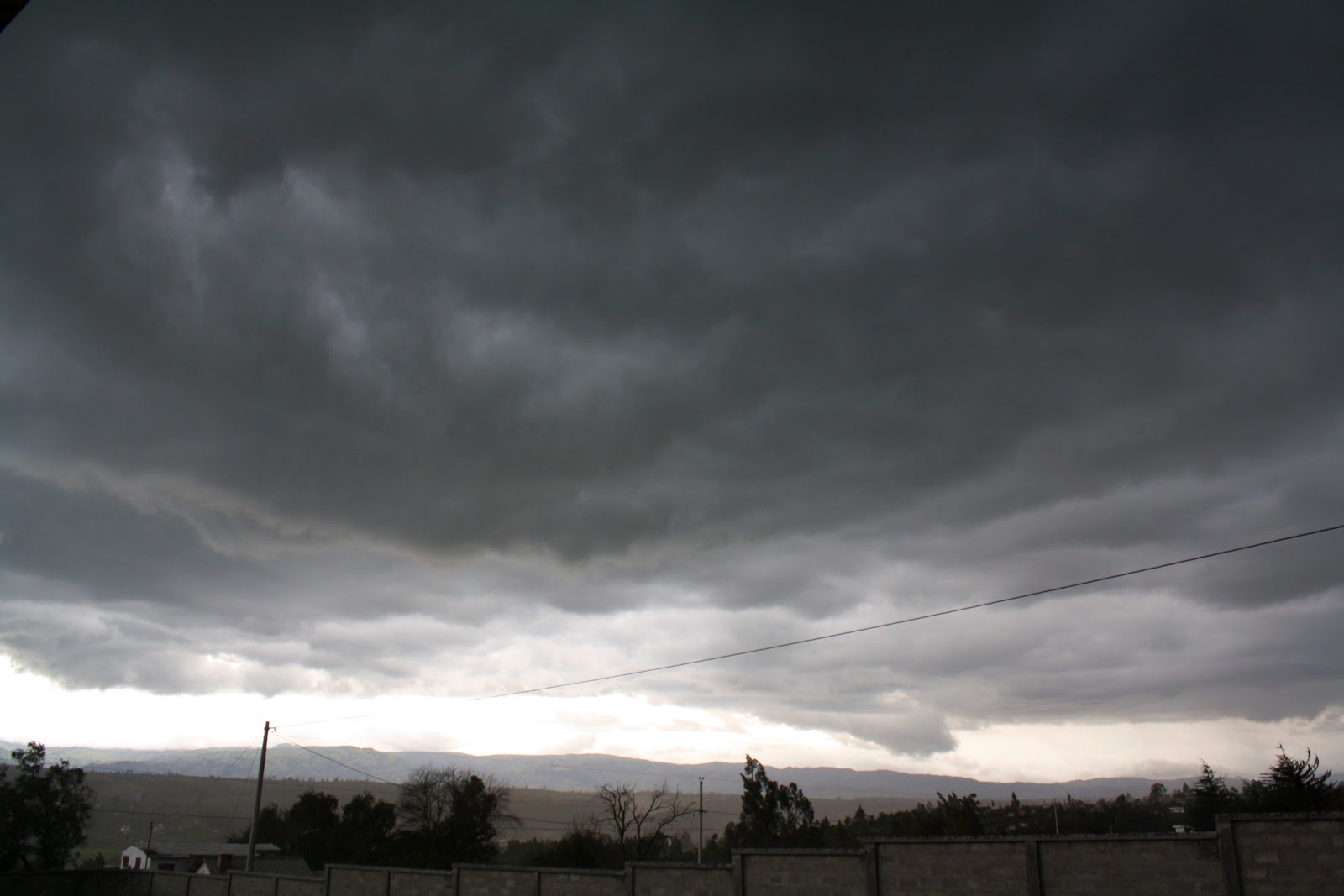
I stood outside as the clouds increasingly grew black. In the yard I taught a couple little boys to blow the remains of a dandelion into the air. One of them, Carlos, rode around on his tricyle. Eventually they began heading inside, missing the beginning of the show that was about to take place. Carlos called to me to come with him, but I couldn’t take my eyes of the natural stage in the sky.
The clouds gained speed as they moved from the mountains in the distance closer to us. Weighed down by hours or days of moisture, their canopy seemed daunting. Slowly my mental thoughts cleared and my concerns of the day disappeared as all of my attention was taken by the storm above me. Every inch of independent anxiety was alleviated and washed away by the slow onslaught of the raindrops and the echoing thunder. Faster and faster they fell down onto the grass, drowning the dirt and pounding the pavement. This time I was safe under the awning, kept dry and alive to watch the incredible forceful throws of the storm surrounding me now. The thick clouds had moved over top of the orphanage and the smell of the rain made me smile.
It was sublime for a few minutes, especially when the hail came. I watched jagged edges of lightning cut the sky and break it for a moment. Thunder boomed its way into the distance and I watched the grass sigh, relieved that la tormenta had drifted.
Being driven to our hotel, we saw that the rain had managed to flood the roads, particularly a bridge that our taxi needed to cross, with water rising up into the bottom of the car. At the restaurant of our hotel the four of us shared a bottle of wine among our tiny sherry glasses and toasted to Valentine’s Day.
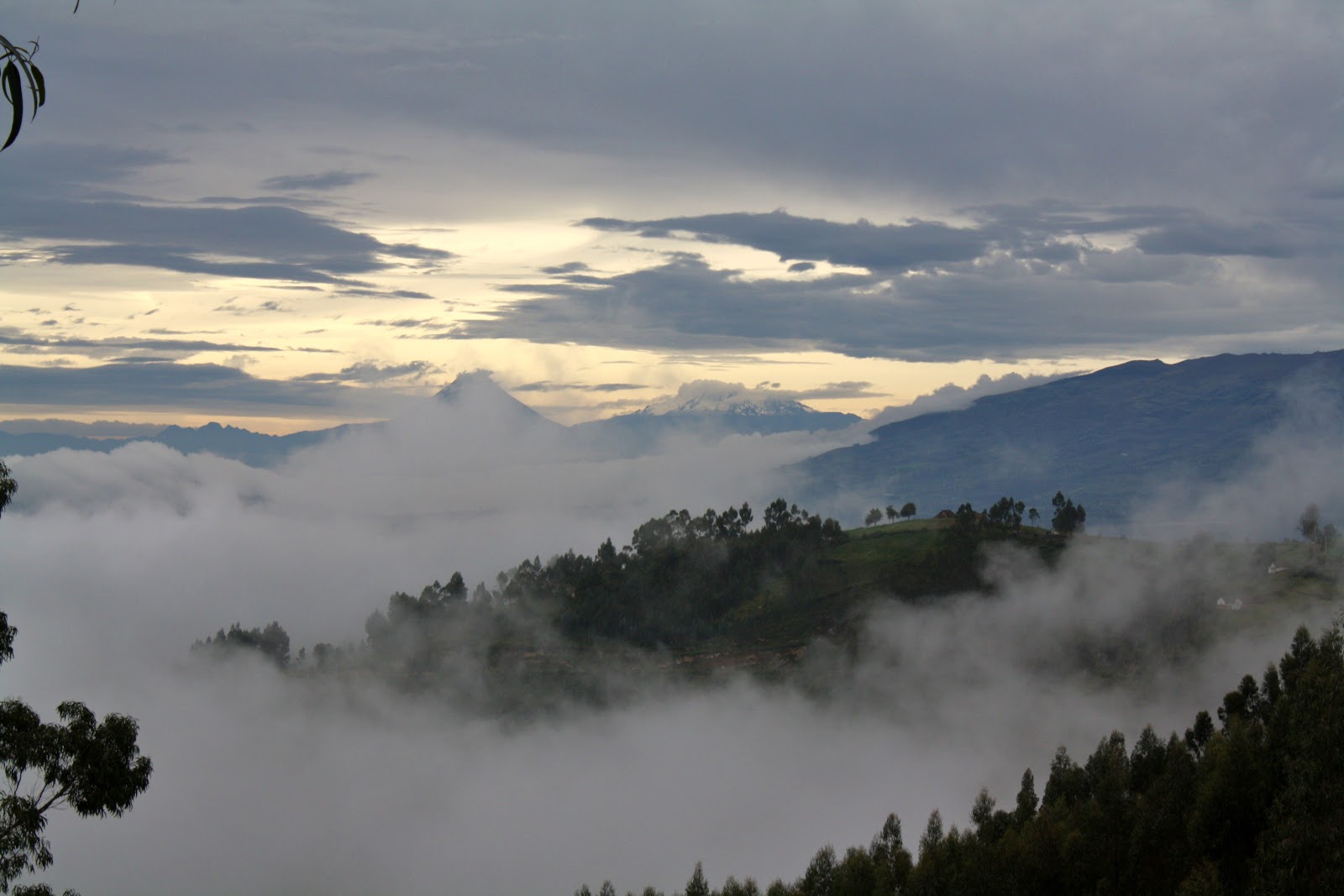
The next morning we rose early for our drive to a lake within a crater. We hired a driver who showed up with his little red truck and a camouflage jacket on. He drove us higher into the hills, above some of the low lying clouds. The volcano in the distance showed its face briefly but soon it was overshadowed by the moving clouds that slowly tiptoed their way in front. They drifted into the valley like ballet dancers, slow yet elegant in their sweeping powerful pointe work of pirouettes embodied with allegro and chassé.
Onward our truck took us, the terrain gradually becoming more divided in color and texture. We were now among the land of the indigenous farmers, their dry grass bound houses settled into the mountainsides as if it were a Shire. The bright pink or red dots marking the indigenous people with their colorful clothing often speckled the deep brown dirt.
Looking out my window, I remembered the glory of traveling. Here was a pocket of the world now made known to me, staring at me. We would drive straight for a bit and then curve sharply to the left or the right and the land would dip down and open up a whole other pocket of quilted farms, stitched together by people once escaping from the Spaniards. The shades of green below us and gray clouds hovering above us created a feeling of stillness. Alongside the road we would pass a couple of women wearing skirts to their knees, high socks, brightly colored shawls with long hair in a single braid wrapped with fabric and a panama hat on top. Half the time, they will have a baby wrapped onto their back as well.
We drove by one woman walking alone on the edge of the road. She was wearing a bright magenta shawl and stoically looking over the hillside at the expanse of farmland below her. I imagined her mind thoughtfully suspended in the air above her though her body was still walking around. Another woman we passed had a bright orange shawl and was herding sheep, lamas, and even a donkey all at the same time. Two more women worked the tilted black dirt up the hillside, one with a baby on her back. I wondered whether they felt satisfied.
Similar to when I’ve driven through the highlands of Scotland, I wish I could hear the stories of the land. In both places there is an eeriness that lingers in the air, alarming you that things have happened in these places even though it may be quiet and still now. The way the land showed itself with its colorful quilt, it was begging for quality time. I wish I could have lingered there a little longer.
The glory of traveling is wrapped up in the tragedy of leaving. But the fleeting moments can’t be stopped, they linger on and speed by as soon as you look up to see them.
Once we arrived at the crater it began to rain. The lake surprised me with its deep turquoise color as if someone had photoshopped and tweaked it to make it look more fantastical. But we only saw it for a moment before the rain chased us back to Latacunga.
Today myself and “the Canadians”/some-of-my-only-friends-in-Ecuador went out to one of the Tia’s houses, in the countryside, where we saw how many families here actually live.
It took an hour by bus, passing deep cuts in the earth and tall pinnacles that mark the Andes. The drop off caused me to compare the dangers of transport by bus, car or plane. Air travel won as the least dangerous, buses came in second and cars took third. But don’t worry, wires run along the side of the road to catch any vehicle attempting suicide.
The lines on the roads are just guidelines here. When deciding to pass, cars often linger on the middle line. If there are three lanes headed in one direction, cars criss-cross and sometimes drive more on the dotted lines than in their lane. As I sat in the front seat of a speeding taxi yesterday, gazing out of the broken windshield, I wondered how many fatalities occur annually.
But let’s get back to the bus that took us out into the countryside today. First, we stopped and went to a small museum about indigenous life and bought some biscotti-type pastries in a little town populated with many more indigenous people. Afterwards, we hopped another bus up to the road of our friend’s house. We journeyed through farmland and hiked up a steep road finally reaching her stone driveway, leading us at a sharp angle up to her family’s little concrete two story house. She showed us their guinea pigs outside, which are commonly raised and eaten (the meat is rather expensive, often eaten at festivals). We were offered potatoes and roasted maíz and I was told that my Spanish is good “but I just don’t want to speak it” (not true!).
After sitting on the bed in the entrance room, gazing at a poster of teenage Leonardo Dicaprio and talking with our friend and her mother (to the best of our Spanish ability), we took a walk up the steep hills and along a small river to visit our friend’s two black cows. We passed men cutting down trees, pigs, sheep and lots of prickly plants. The sun clenched my skin and bit me in various places, mainly my cheeks, feet and the back of my neck.
I am now, what they call in the states, a “red neck”.
Here at festivals they actually have pink masks to wear, making fun of the Spanish conquistadors. Sunburn and color changing skin is universally such a crowd pleaser.
So there we were, hiking around the hilly countryside and taking in the views of the mountains and volcano in the distance. It all seemed very normal, despite the long distance we had traveled to get to that kind of scenery. We returned back to the concrete structure and I used the toilet that had no door, and therefore able to enjoy a view of the countryside during the experience.
Dehydration zapped me on the bus ride home. I returned to this beautiful guest house, fed myself a bunch of things, and am now relaxing on a wonderfully comfortable sofa in a well-lit room with wi-fi.
I’ve dealt with people’s different standards of living before, but this time I returned with a normal sense of just being thankful. I feel simply thankful that I don’t have an hour and a half bus commute along dangerous roads at 6:00 AM, or use bathrooms without doors, or worry about the quality of the water I’m drinking. I’m 26 years old and am not ridden with 6 or 7 children already, my houses have never had barbed wire surrounding them and I don’t worry about dogs biting me or being nasty. My living situations have always including carpeting, wood floors or tiles, along with painted walls and windows without bars in front…
(the list goes on)
It’s good to be thankful, and thankful we shall be.
I could see his mouth exercising, moving with so much power!
Speak!
Walk!
Walk Leslie! Walk!
I held her arms with my hands under her shoulders, while her feet stepped.
Walk!
Swallow!
Swallow Tati! Swallow!
As she came charging at me, I wiped her mouth with her bib, hugging.
Swallow!
I do so want to witness José’s first words. Sitting with him this morning, I would not relent, telling him, “Hola!” trying to show him how words were coming from my throat. I encouraged him to use his voice, pronouncing every word strongly, envisioning a breakthrough.
Prior to that I was helping little Leslie walk around the yard, up the wooden clubhouse ramp, over to the little wooden playhouse, and even down the slide covered in water droplets. I had a small desire to be a physical therapist in these moments.
With bravery, they move and try. Leslie quietly insisted she walk, happily stepping slowly and crookedly. José laughs instead of speaks and laughs the more that he tries, getting up and hobbling around the playground and inside the house. His fingers are bent and have calluses from him chewing on them instead of talking. But then I look at my bitten and destroyed nails and can hardly throw a stone at him.
It’s amazing to watch them try so much and so elegantly, without tears or anger, but with unassuming grace and having such a casual way about them. They’re becoming my favorite ones to see and work with, they’re smiles seem deeper knowing their disabilities.
The Tías show the same grace with the children, guiding them with understanding instruction and always telling the children how beautiful they are and how wonderful they’re doing. Words and support can grow such talented and intelligent children, despite the abilities they may not have been born with or the parents who have left them to themselves.
As Tati comes charging towards me, mouth hanging open, saliva dripping down in one long thin glob, I think,
Hug!
Hug, Sarah! Hug!
But it’s really not that hard to give hugs to kids with such wonderful smiles.


.jpg)
.jpg)